
BPC-157
What It Is
BPC-157 stands for Body Protection Compound-157, a peptide originally identified in human gastric juice. It is a fragment of a naturally occurring protective protein found in the digestive system.
Researchers became interested in BPC-157 because of its unusually broad effects on tissue repair, angiogenesis (new blood vessel formation), and inflammation signaling.
Unlike many peptides that act through hormone pathways, BPC-157 appears to interact with multiple healing systems simultaneously — including growth factors, nitric oxide pathways, and connective tissue signaling.
This is why it’s often described as a systemic repair peptide.
Key Benefits
Musculoskeletal Repair
• tendon healing
• ligament repair
• muscle recovery
• joint inflammation reduction
• accelerated recovery from strains and tears
BPC-157 appears to stimulate fibroblast activity — the cells responsible for building connective tissue.
Gut Protection
One of its most interesting properties.
Research suggests BPC-157 may support:
• intestinal lining repair
• reduction of gut inflammation
• improved mucosal healing
• protection against gastric ulcers
This aligns with its origin in gastric protective compounds.
Anti-Inflammatory Effects
BPC-157 appears to modulate inflammatory signaling pathways.
Possible benefits include:
• reduced swelling
• decreased inflammatory cytokines
• improved recovery from injury
Nerve and Brain Support
Emerging research suggests possible effects on:
• nerve regeneration
• dopamine signaling balance
• neuroprotection after injury
This area is still developing but shows interesting promise.
Circulation and Angiogenesis
BPC-157 may stimulate the formation of new micro-blood vessels, improving nutrient delivery to damaged tissue.
This is one reason it’s frequently used in injury recovery protocols.
Typical Reconstitution Example
Example vial: 10 mg BPC-157
Add 2.5 mL bacteriostatic water
Resulting concentration:
10 mg ÷ 2.5 mL = 4 mg per mL
Using a standard insulin syringe:
100 units = 1 mL
So:
250 mcg dose ≈ 6 units
500 mcg dose ≈ 12 units
Typical Dosing Strategy
Common ranges used in research and clinical experimentation:
250 mcg – 500 mcg per dose
Most commonly:
• once daily
or
• twice daily during active injury recovery
BPC-157 appears to work through signaling cascades rather than immediate pharmacologic effects, so consistency matters more than large doses.
Injection Timing
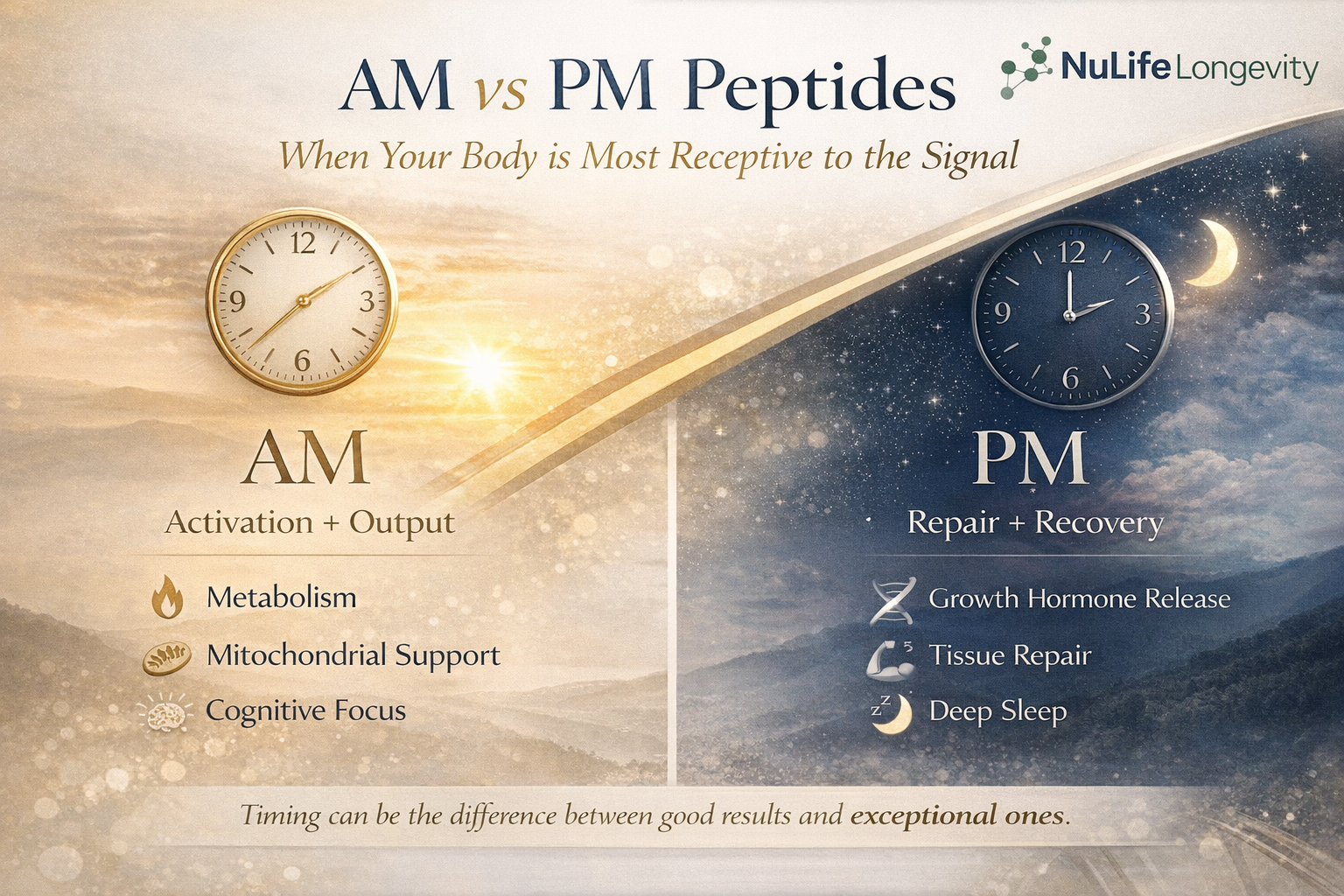
Morning
Often used in the morning to support daytime tissue repair and inflammation control.
Evening
Evening injections may complement the body’s natural nighttime repair cycle, particularly for connective tissue recovery.
Timing is less critical for BPC-157 than for growth hormone peptides.
Injection Frequency
Typical patterns:
General recovery: 1 injection daily
Active injury: 2 injections daily
Cycles
4–8 weeks commonly used
Some practitioners use continuous protocols for chronic injuries.
Best Peptide Stacks
BPC-157 + TB-500
This is the classic repair stack.
Why it works:
BPC-157
→ local tissue healing and inflammation control
TB-500
→ systemic tissue regeneration and cell migration
Together they address both local injury signaling and whole-body repair mechanisms.
BPC-157 + GHK-Cu
Used when healing involves skin or connective tissue remodeling.
Example cases:
• surgical recovery
• scar repair
• aesthetic healing
BPC-157 + KPV
Helpful when inflammation involves gut or immune signaling.
KPV is strongly anti-inflammatory, especially in the digestive system.
Support Supplements
Supporting tissue repair biologically improves peptide effectiveness.
Useful additions:
Collagen peptides
Provides amino acids needed for connective tissue repair.
Vitamin C
Essential cofactor for collagen synthesis.
Magnesium
Supports muscle and nerve recovery.
Omega-3 fatty acids
Helps reduce inflammatory signaling.
Expected Timeline
Biology moves on biological time — not internet time.
Typical observations:
3–7 days
Reduced inflammation or pain
2–4 weeks
Improved mobility and tissue repair
6–8 weeks
More complete structural recovery
Severe injuries may take longer.
Ideal Use Cases
• tendon injuries
• ligament damage
• joint inflammation
• muscle strains
• post-surgical healing
• gut inflammation
• chronic overuse injuries
Cautions
Because BPC-157 affects multiple signaling pathways, it should be used thoughtfully.
Considerations include:
• limited long-term human data
• research compound status in many countries
• avoid excessive stacking with multiple healing peptides without clear intent
As with any biologically active compound, more is not always better.