
What It Is
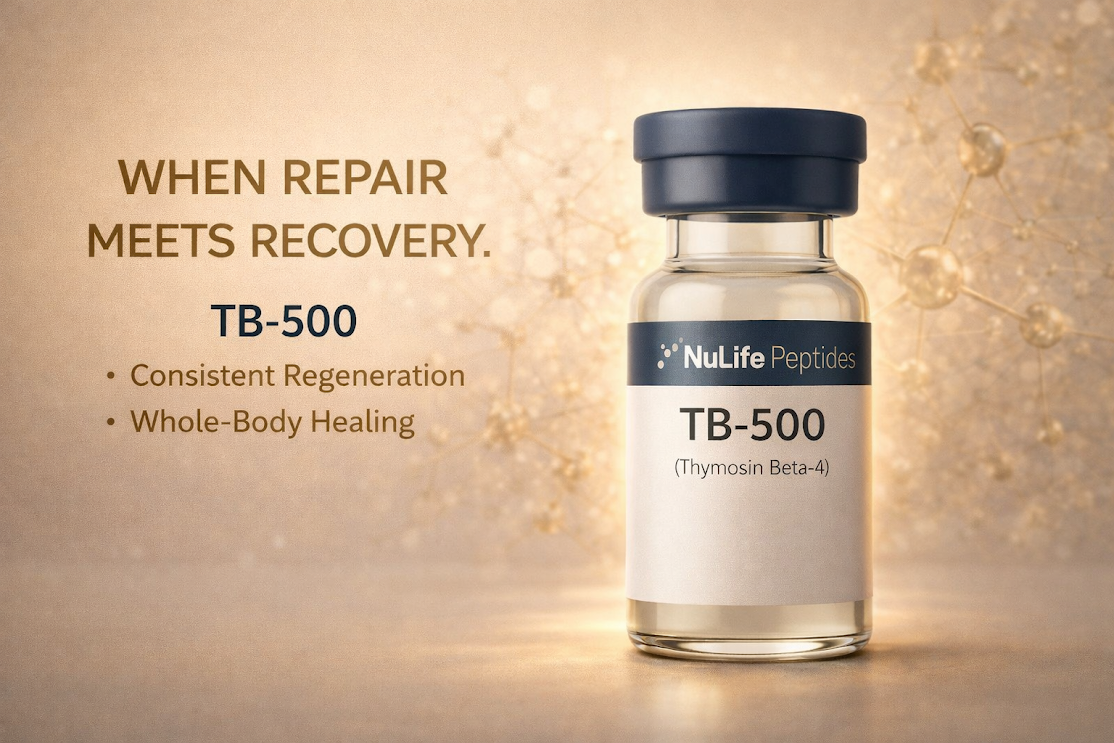
TB-500 is a synthetic version of a naturally occurring peptide fragment derived from Thymosin Beta-4, a protein found in nearly all human cells.
Thymosin Beta-4 plays an important role in cell migration, tissue regeneration, and wound healing.
One of its primary biological functions is regulating actin, a structural protein that allows cells to move, repair tissue, and rebuild damaged structures.
Because of this, TB-500 appears to help mobilize repair cells and promote tissue regeneration across the body, rather than acting only at a specific injection site.
Key Benefits
Connective Tissue Repair
TB-500 is frequently associated with improvements in:
• tendon healing
• ligament repair
• muscle recovery
• joint mobility
Its ability to stimulate cell migration allows repair cells to reach injured tissue more efficiently.
Systemic Healing Effects
Unlike many peptides that work locally, TB-500 appears to circulate widely throughout the body.
This may support healing in:
• multiple injury sites
• chronic inflammation areas
• deep connective tissue
This is why it’s often described as a systemic repair peptide.
Reduced Inflammation
TB-500 appears to influence inflammatory signaling and may help reduce:
• swelling
• tissue irritation
• inflammatory cytokines
This may improve mobility and recovery speed after injury.
Improved Flexibility and Mobility
Many users report improved range of motion and decreased stiffness during healing.
This likely results from a combination of:
• reduced inflammation
• connective tissue repair
• improved blood flow
Angiogenesis Support
Thymosin Beta-4 is associated with angiogenesis, the formation of new blood vessels.
Improved circulation may allow damaged tissues to receive:
• oxygen
• nutrients
• repair cells
All critical components for tissue regeneration.
Typical Reconstitution Example
Example vial: 10 mg TB-500
Add 2.5 mL bacteriostatic water
Concentration:
10 mg ÷ 2.5 mL = 4 mg per mL
Using a standard insulin syringe:
100 units = 1 mL
So:
2 mg dose ≈ 50 units
Typical Dosing Strategy
TB-500 is often used differently from smaller peptides.
Common protocols include loading phases followed by maintenance.
Example:
Loading phase
2–5 mg weekly for 4–6 weeks
Maintenance phase
2–5 mg monthly or as needed
Some protocols split weekly doses into two smaller injections.
Injection Timing
Timing is generally flexible.
Morning
Often chosen simply for routine consistency.
Evening
Some prefer evening injections to coincide with the body’s nighttime repair cycles.
Unlike GH peptides, TB-500 does not rely heavily on circadian hormone timing.
Consistency tends to matter more than exact timing.
Injection Frequency
Typical approaches include:
Weekly injection
Split into two doses per week
Short repair cycles of 4–8 weeks
Because TB-500 has a longer biological activity window, daily injections are usually unnecessary.
Best Peptide Stacks
TB-500 + BPC-157
This is the most widely used repair stack.
BPC-157
→ localized healing and inflammation control
TB-500
→ systemic repair and cell migration
Together they support both local tissue regeneration and whole-body healing signals.
TB-500 + GHK-Cu
Used when recovery also involves skin, fascia, or collagen remodeling.
Example situations:
• post-surgical recovery
• scar repair
• connective tissue damage
Support Supplements
Supporting the biological repair environment can enhance recovery.
Useful additions include:
Collagen peptides
Provides structural amino acids for tissue repair.
Vitamin C
Required for collagen synthesis.
Magnesium
Supports muscle and nerve function.
Omega-3 fatty acids
Helps reduce inflammatory signaling.
Expected Timeline
Recovery timelines depend on the severity of injury.
Typical observations include:
1–2 weeks
Improved mobility or reduced inflammation
3–5 weeks
Noticeable improvements in tissue healing
6–8 weeks
More complete recovery of connective tissue
Severe injuries may require longer healing cycles.
Ideal Use Cases
• tendon injuries
• ligament tears
• muscle strains
• joint inflammation
• chronic overuse injuries
• post-surgical recovery
• athletic recovery support

Cautions
As with many research peptides, long-term human data remains limited.
Considerations include:
• research compound status in many countries
• avoid excessive stacking with multiple repair peptides unnecessarily
• healing peptides should complement proper rehabilitation, not replace it
Biological repair still requires time, nutrients, and mechanical recovery.