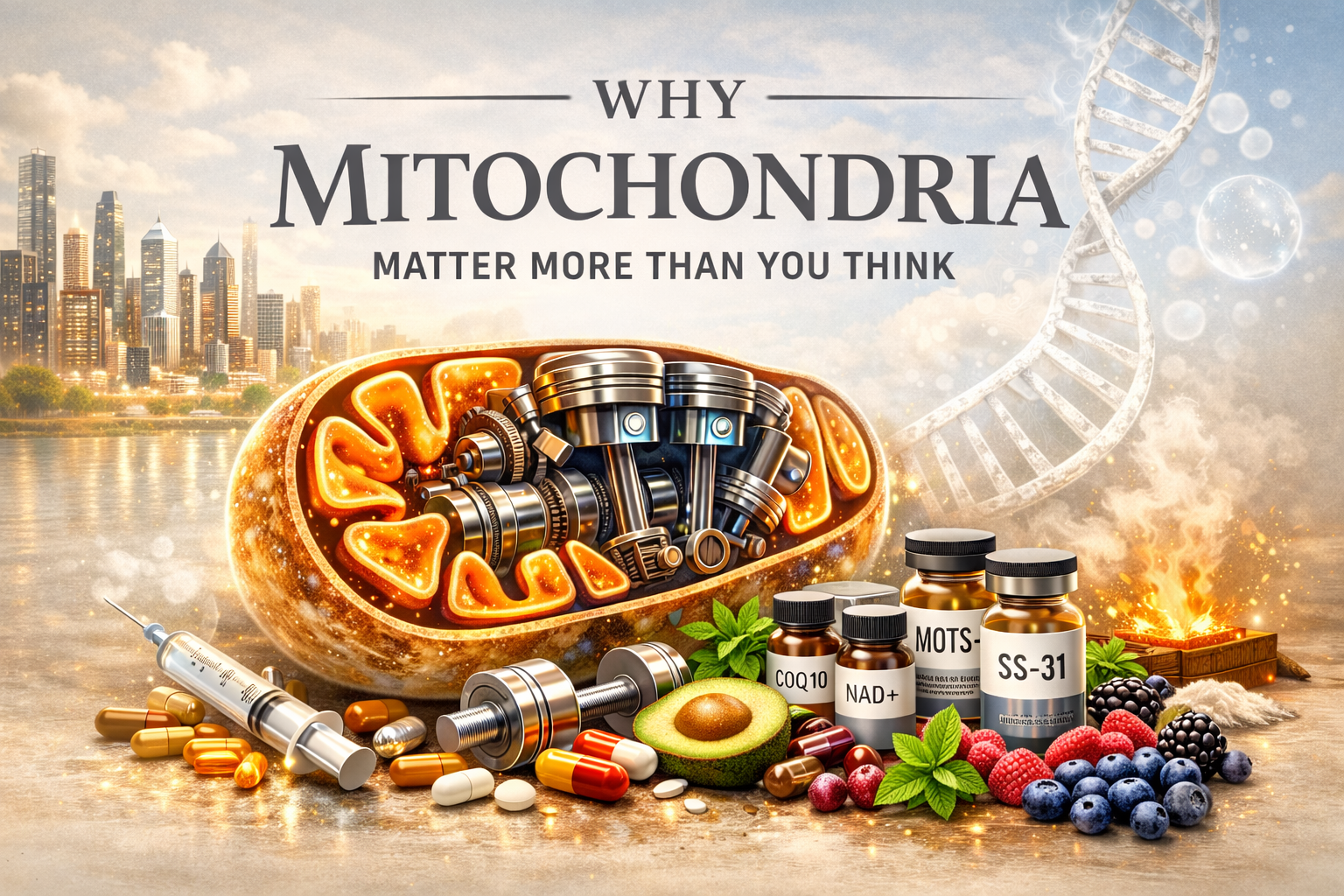
Biology hides its most important machinery in the tiniest places. (tiny things come in BIG packages!) Inside nearly every cell in your body are little structures called mitochondria, and they quietly run the whole show.

If you want to understand energy, aging, metabolism, and recovery, you need to know about one tiny structure inside your cells:

Mitochondria.

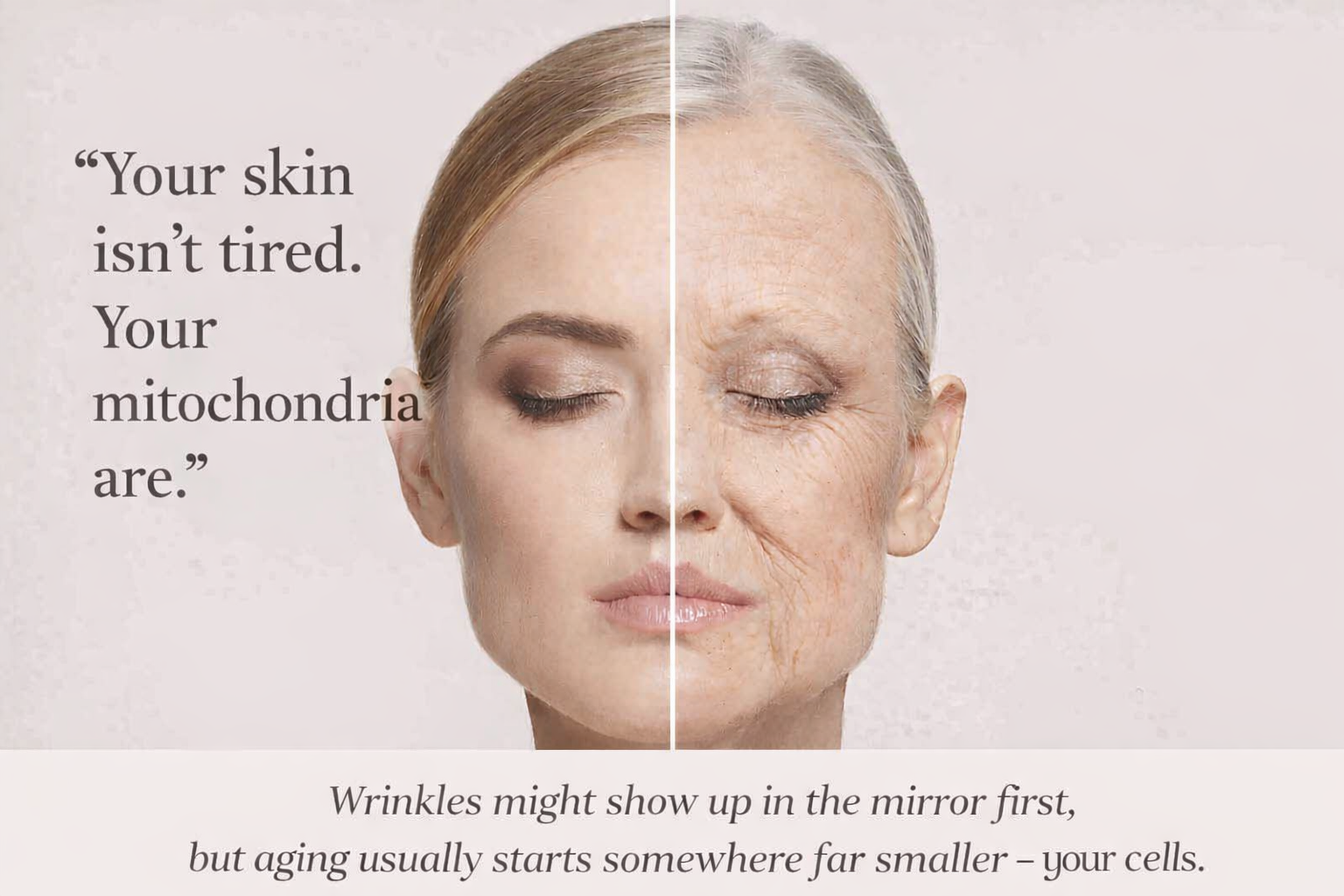
Your skin isn’t tired.

Your mitochondria are.

And that changes everything about how we understand aging.

Because what you see on the surface—dullness, fine lines,  loss of elasticity, isn’t where the problem starts.

It starts at the cellular level.

Where energy is created… or lost.

What are mitochondria? These are the microscopic engines that power the body.

Every movement you make, every thought you think, every cell repair happening in your skin, muscles, and brain depends on energy produced by mitochondria.

When those systems run well, life feels good: energy is stable, workouts feel productive, skin repairs itself, the brain stays sharp, and metabolism behaves.

When they don’t… everything starts to feel a little dimmer.

Fatigue creeps in. Recovery slows. Brain fog shows up. Skin looks dull. Fat loss becomes harder. Muscle becomes harder to maintain.

Most people think that’s just “getting older.”

Biology tells a more interesting story.

Aging is often less about time and more about mitochondrial decline.

Mitochondria produce ATP, which is the cellular fuel your body uses for almost everything. But they also regulate oxidative stress, inflammation, metabolic signaling, and cellular repair. Over time they become damaged by stress, toxins, poor sleep, poor nutrition, and chronic inflammation. The result isn’t a dramatic failure — it’s a gradual drop in cellular efficiency
Your body becomes a city running on an aging power grid.

Lights still turn on… just not as brightly.

The fascinating part is that mitochondria are dynamic structures. They constantly divide, repair themselves, and create new copies in a process called mitochondrial biogenesis. With the right signals, the body can literally build new, healthier mitochondria.

And that’s where modern longevity science gets interesting.

Mitochondria and Skin Aging

  • Mitochondria produce the energy your skin cells need to function
  • This energy fuels:
    • collagen production
    • cellular repair
    • skin turnover
  • When mitochondrial function declines:
    • collagen synthesis slows
    • oxidative stress increases
    • visible aging accelerates  

Peptides and Mitochondrial Signaling

Peptides act like biological text messages. They tell cells what to repair, what to build, and how to respond to stress. Several peptides being studied today interact directly or indirectly with mitochondrial health.

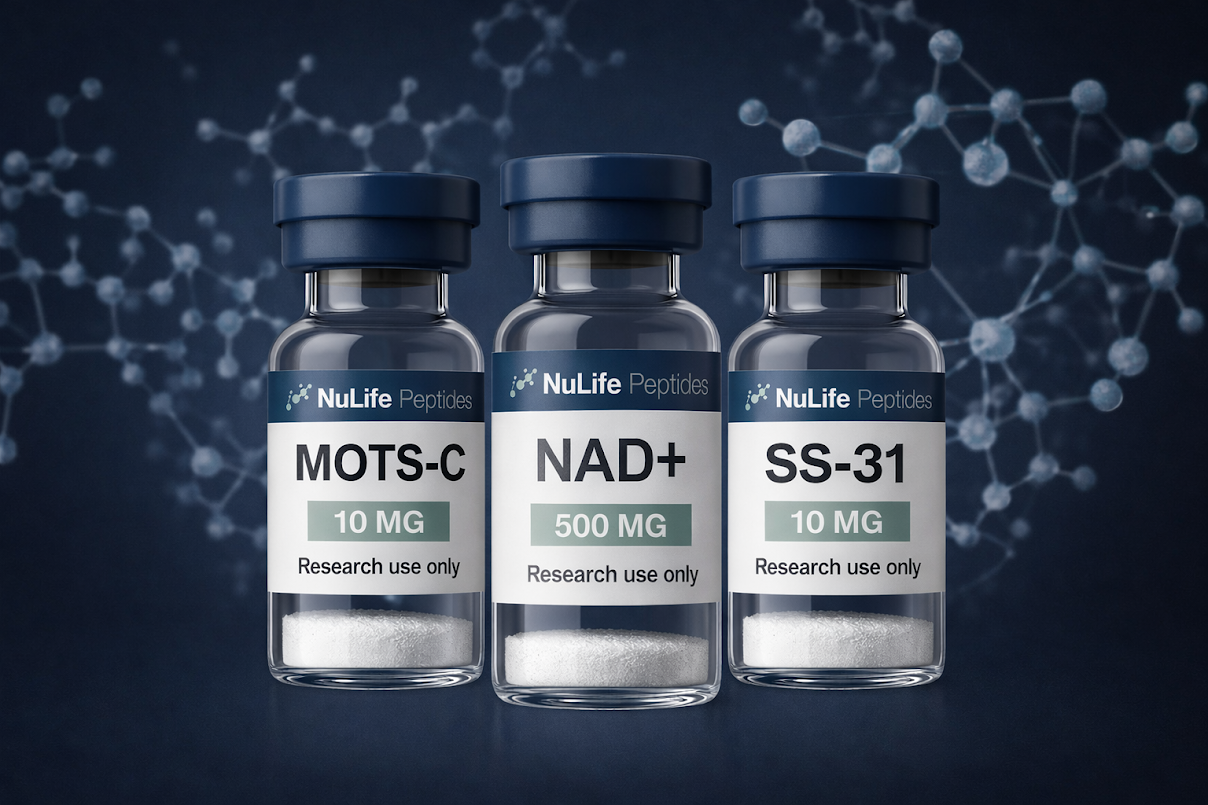
MOTS-c is one of the most fascinating. It’s actually a peptide naturally encoded inside mitochondrial DNA itself. Think of it as a distress signal that helps the body respond to metabolic stress. Research suggests MOTS-c improves metabolic flexibility, helps cells burn fuel more efficiently, and supports the creation of new mitochondria. In practical terms, that can mean better endurance, improved glucose control, and stronger cellular energy production.

SS-31 (also known as elamipretide) works in a different way. It targets the inner membrane of mitochondria where energy production occurs. That membrane is delicate and easily damaged by oxidative stress. SS-31 helps stabilize it, which can improve ATP production and reduce cellular “energy leaks.” Scientists have been studying it for muscle fatigue, cardiovascular health, and age-related mitochondrial dysfunction.

NAD+ signaling peptides and precursors are another important layer. NAD+ is a molecule required for mitochondrial energy production and DNA repair. Levels naturally decline with age. Compounds that raise NAD+ levels — including peptides being explored in longevity research — help activate sirtuins, enzymes involved in mitochondrial repair and metabolic resilience.

Another peptide often discussed in recovery protocols is BPC-157. While it’s better known for tissue repair and inflammation control, improving circulation and reducing inflammatory signaling indirectly supports mitochondrial health because cells repair more efficiently when inflammation is reduced.

Each of these compounds works through different biological pathways, but the theme is the same: improve the cellular environment so mitochondria can function and regenerate properly.

Lifestyle Signals That Rebuild Mitochondria

Peptides are powerful signals, but biology always listens to lifestyle first.

Exercise is one of the strongest mitochondrial triggers we know. Resistance training and interval training send a signal to cells that energy demand has increased, which pushes the body to create more mitochondria. Muscles literally become richer in cellular power plants.

Sleep is equally important. Deep sleep is when mitochondrial repair and cellular cleanup processes accelerate. Chronic sleep deprivation damages mitochondrial function faster than almost anything else.

Nutrition also matters more than people realize. Mitochondria run on nutrients like fatty acids, glucose, amino acids, and micronutrients that drive energy metabolism. Foods rich in polyphenols, like berries, olive oil, and green tea, activate pathways involved in mitochondrial repair. Omega-3 fatty acids help maintain the integrity of mitochondrial membranes rich in whole foods, healthy fats, colorful plants, and adequate protein give mitochondria the raw materials they need.

Certain supplements also support mitochondrial function:

CoQ10 plays a key role in the electron transport chain, the process mitochondria use to generate ATP.

Acetyl-L-carnitine helps shuttle fatty acids into mitochondria where they can be burned for fuel.

Magnesium supports hundreds of enzymatic reactions involved in energy production.

Alpha-lipoic acid acts as a mitochondrial antioxidant and supports glucose metabolism.

Polyphenols from foods like berries, green tea, and dark chocolate can also activate pathways involved in mitochondrial biogenesis.

Even simple habits like sunlight exposure, cold exposure, and metabolic flexibility through fasting can stimulate mitochondrial adaptation.

Skin aging begins at the cellular level, not the surface

Why This Matters for Aging

When people talk about longevity, they often focus on appearance.

Wrinkles. Skin elasticity. Hormones.

But beneath all of that is a much more fundamental layer: cellular energy.

If mitochondria function well, cells repair faster, inflammation stays lower, metabolism remains flexible, and tissues maintain resilience longer.

Support the cellular power plants, and the entire city runs better.

This is why mitochondrial science has become one of the most exciting areas in modern longevity research.

Because aging isn’t just about time passing.

It’s about whether your cells still have the energy to keep rebuilding themselves.

Supporting cellular function is key to long-term skin health

Most anti-aging conversations focus on what we see in the mirror, but longevity science keeps pointing back to something much deeper. When the microscopic engines inside cells are healthy, tissues repair better, metabolism behaves, energy stays stable, and the body simply functions the way it was designed to.

Support the engines, and everything else tends to run better.

Aging isn’t just about time.

It’s about energy.

And when your cells no longer have the energy to repair, rebuild, and maintain structure…

that’s when aging becomes visible.

Which means the real question isn’t:

“What should I put on my skin?”

It’s:

What’s happening inside my cells?
Next Post
PEPTIDE CHEAT SHEETAgingLongevityPeptides

PEPTIDE CHEAT SHEET

March 27, 2026
P3ptide Timing, Dosing & Delivery: Why Most People Get It WrongPeptides

P3ptide Timing, Dosing & Delivery: Why Most People Get It Wrong

March 18, 2026
IpamorelinPeptide DictionaryPeptides

Ipamorelin

March 20, 2026