
What It Is
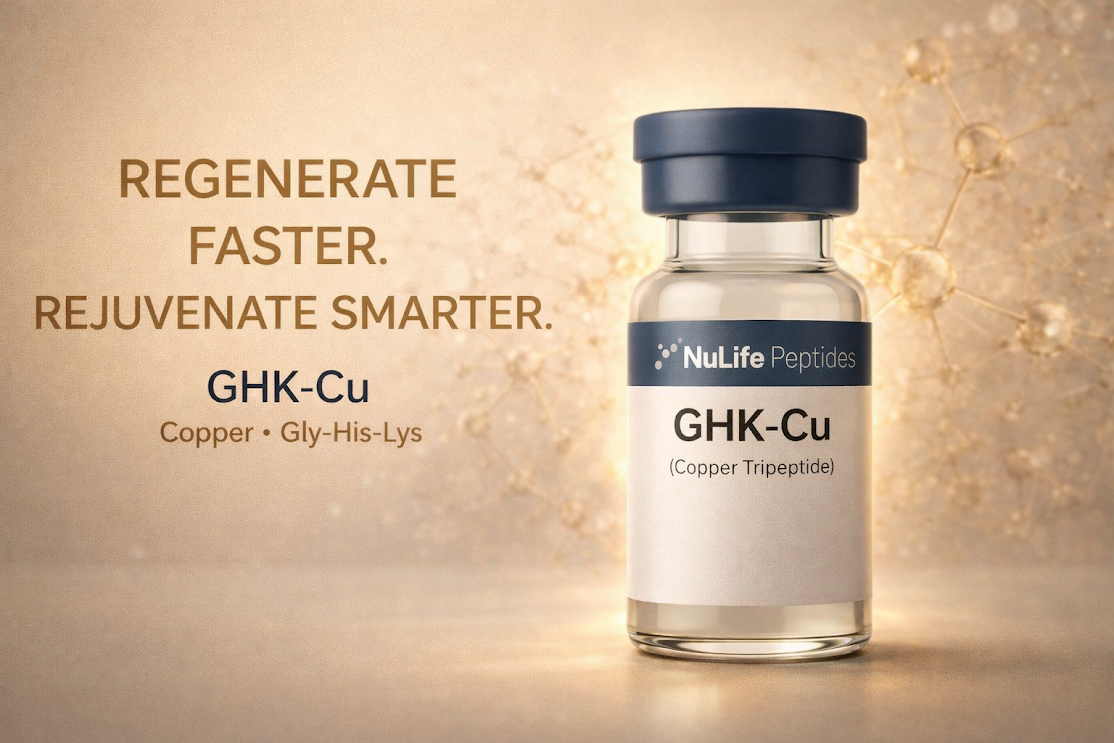
GHK-Cu (Glycyl-L-Histidyl-L-
It was first identified in 1973 by biochemist Dr. Loren Pickart, who discovered that this small peptide could stimulate tissue regeneration and wound healing.
GHK binds copper ions to form GHK-Cu, the biologically active complex that participates in:
• tissue repair signaling
• collagen and elastin synthesis
• antioxidant activity
• gene regulation involved in regeneration
One fascinating observation from early research: GHK levels decline significantly with age, which may partially explain slower healing and reduced collagen production later in life.
Key Benefits
Skin Regeneration
GHK-Cu is most widely known for its effects on skin structure and repair.
Research suggests it may help:
• stimulate collagen production
• increase elastin formation
• improve skin thickness
• reduce fine lines and wrinkles
• accelerate wound healing
It essentially signals fibroblasts—the cells responsible for building skin structure—to become more active.
Hair Growth Support
GHK-Cu may help support healthier hair follicles.
Possible effects include:
• stimulation of follicle activity
• improved scalp circulation
• reduced inflammation around follicles
• prolonged hair growth phase
This is why it is often used in topical hair restoration formulations.
Anti-Inflammatory Effects
GHK-Cu appears to help regulate inflammatory signaling pathways.
Potential benefits include:
• reduced skin inflammation
• improved recovery after cosmetic procedures
• decreased oxidative stress
Antioxidant Activity
Copper peptides appear to help neutralize reactive oxygen species.
This may help:
• protect cellular structures
• support DNA repair pathways
• reduce oxidative damage
Tissue Remodeling
GHK-Cu appears to influence gene expression related to tissue repair and regeneration.
Studies suggest it may activate genes involved in:
• wound healing
• connective tissue remodeling
• blood vessel formation
This makes it particularly interesting for skin and soft tissue recovery.
Typical Reconstitution Example
Example vial: 10 mg GHK-Cu
Add 2.5 mL bacteriostatic water
Concentration:
10 mg ÷ 2.5 mL = 4 mg per mL
Using a standard insulin syringe:
100 units = 1 mL
So:
100 mcg dose ≈ 2.5 units
200 mcg dose ≈ 5 units
500 mcg dose ≈ 12.5 units
Typical Dosing Strategy
Common ranges used in peptide protocols:
100–500 mcg per dose
Most commonly:
• once daily
or
• 3–5 injections per week
Lower doses are often used because GHK-Cu acts primarily as a signaling peptide rather than a hormone-level modulator.

Injection Timing
Morning
Morning injections are commonly used when targeting skin health and daytime tissue repair.
Evening
Some prefer evening injections to coincide with overnight repair and regeneration cycles.
Timing is flexible and less sensitive than growth hormone peptides.
Injection Frequency
Typical approaches include:
Daily injections
3–5 injections per week
4–8 week cycles
Some individuals use longer protocols for skin regeneration programs.
Best Peptide Stacks
GHK-Cu + BPC-157
Useful when both skin and connective tissue healing are needed.
BPC-157
→ inflammation control and tissue repair
GHK-Cu
→ collagen remodeling and skin regeneration
GHK-Cu + TB-500
Helpful for systemic healing combined with skin repair.
TB-500
→ systemic connective tissue regeneration
GHK-Cu
→ collagen and structural remodeling
GHK-Cu + Collagen Peptides
Combines signaling with structural building blocks.
GHK-Cu signals collagen production while collagen supplements provide amino acids required to build it.
Support Supplements
Because GHK-Cu influences collagen formation, certain nutrients can enhance the process.
Useful additions include:
Vitamin C
Essential cofactor for collagen synthesis.
Collagen peptides
Provides glycine, proline, and hydroxyproline for connective tissue repair.
Zinc
Supports skin healing and immune function.
Omega-3 fatty acids
Helps reduce inflammatory signaling.
⸻
Expected Timeline
Skin regeneration occurs gradually.
Typical observations:
2–4 weeks
Improved skin hydration and texture
6–8 weeks
Increased skin firmness and elasticity
3–6 months
More significant structural skin improvements
Hair growth effects may take longer due to the hair growth cycle.
Ideal Use Cases
• skin aging
• collagen loss
• post-procedure recovery
• scar healing
• hair thinning
• connective tissue repair
Cautions
Although GHK-Cu occurs naturally in the body, supplementation should still be used thoughtfully.
Considerations include:
• avoid excessive copper supplementation alongside GHK-Cu
• long-term human research remains limited
• use consistent dosing rather than escalating doses unnecessarily
As with most regenerative signaling peptides, results depend heavily on overall health, nutrition, and recovery habits.